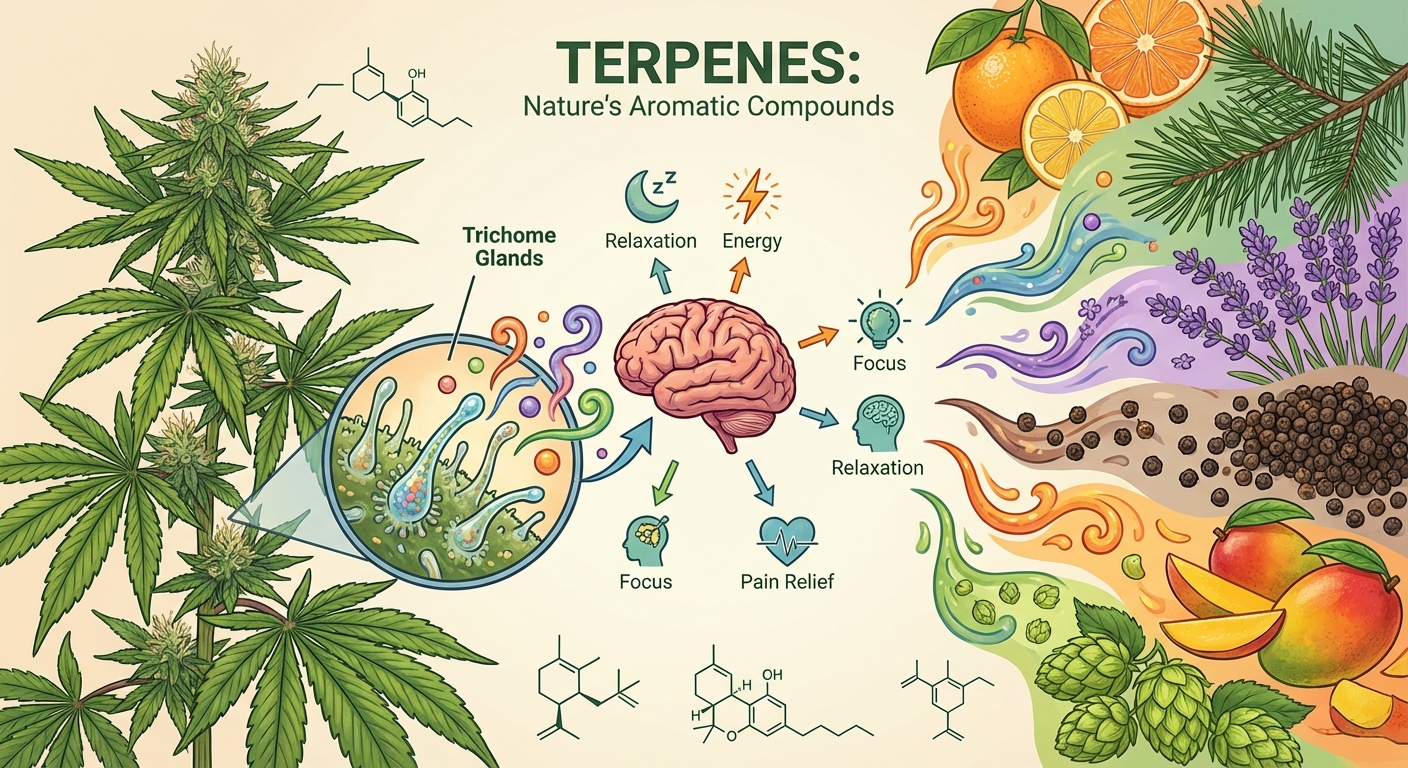
The Complete Guide to Terpenes: Nature's Aromatic Compounds
If you've ever wondered why different cannabis strains smell so distinctly different - from citrusy and bright to earthy and musky - the answer lies in terpenes. These remarkable aromatic compounds are nature's way of creating the incredible diversity of scents and flavors we experience in plants, and they may play a significant role in how cannabis affects us.
What Are Terpenes?
Terpenes are organic compounds produced by a wide variety of plants, including cannabis, conifers, citrus fruits, and aromatic herbs. They're the primary components of essential oils and are responsible for the distinctive aromas we associate with different plants - the refreshing scent of pine forests, the zesty smell of lemon peel, or the calming fragrance of lavender.
Quick Definition
Terpenes are volatile aromatic molecules built from repeating units of isoprene (C5H8). In cannabis, they're produced in the same glands (trichomes) that produce cannabinoids like THC and CBD. Over 200 different terpenes have been identified in cannabis alone.
From an evolutionary perspective, terpenes serve several crucial functions for plants:
- Defense mechanism: Many terpenes repel herbivores and pests
- Pollinator attraction: Sweet-smelling terpenes attract bees and other pollinators
- Protection: Some terpenes have antimicrobial properties that protect plants from pathogens
- Recovery: Certain terpenes help plants heal after damage
Where Are Terpenes Found?
While cannabis enthusiasts have brought terpenes into the spotlight, these compounds are ubiquitous throughout the plant kingdom. Understanding their widespread presence helps us appreciate why they've been used therapeutically for thousands of years.
Cannabis Plants
Cannabis is particularly rich in terpenes, with different strains producing unique terpene profiles that contribute to their distinctive effects and aromas. The terpene content can vary significantly based on:
- Genetic lineage of the strain
- Growing conditions (light, temperature, nutrients)
- Harvest timing
- Curing and storage methods
Fruits and Citrus
Many fruits are excellent sources of terpenes:
- Oranges and lemons: Rich in limonene
- Mangoes: High in myrcene
- Grapes: Contain linalool and geraniol
- Apples: Feature alpha-farnesene
Herbs and Spices
Culinary herbs are treasure troves of terpenes:
- Black pepper: Primary source of beta-caryophyllene
- Lavender: Famous for its linalool content
- Rosemary and sage: Rich in pinene and eucalyptol
- Hops: Share many terpenes with cannabis (they're botanical cousins)
- Basil: Contains linalool and eucalyptol
Trees and Conifers
Evergreen forests owe their distinctive scent to terpenes like pinene and limonene. Pine, fir, and cedar trees are particularly rich in these compounds, which is why forest bathing (shinrin-yoku) has documented health benefits.
Common Types of Terpenes
While hundreds of terpenes exist, certain ones appear frequently in cannabis and have been studied more extensively. Here are the most significant terpenes you should know:
Myrcene
Aroma: Earthy, musky, herbal with hints of clove
Also found in: Mangoes, hops, lemongrass, thyme
Boiling point: 332°F (167°C)
Myrcene is the most abundant terpene in most cannabis strains, often comprising more than 20% of a strain's terpene profile. It's known for its sedating, relaxing effects and is believed to enhance the absorption of cannabinoids through the blood-brain barrier.
Strains high in myrcene: OG Kush, Blue Dream, Granddaddy Purple
Limonene
Aroma: Citrus, lemon, orange
Also found in: Lemon rinds, orange peels, juniper
Boiling point: 348°F (176°C)
The second most common terpene in cannabis, limonene is associated with uplifting, energizing effects. Research suggests it may have mood-enhancing properties and could help with stress relief. It's also being studied for potential anti-inflammatory and antioxidant benefits.
Strains high in limonene: Super Lemon Haze, Durban Poison, Jack Herer
Pinene (Alpha and Beta)
Aroma: Pine, fresh forest, herbal
Also found in: Pine needles, rosemary, basil, parsley
Boiling point: 311°F (155°C)
As the name suggests, pinene smells like pine trees. It's the most common terpene in the natural world. Alpha-pinene is associated with alertness and memory retention, potentially counteracting some of THC's short-term memory effects. It's also a bronchodilator, meaning it may help open airways.
Strains high in pinene: Jack Herer, Dutch Treat, Blue Dream
Linalool
Aroma: Floral, lavender, slightly spicy
Also found in: Lavender, birch bark, coriander
Boiling point: 388°F (198°C)
Linalool is responsible for lavender's calming reputation. Studies suggest it may have anti-anxiety and sedative properties, making strains high in linalool popular for evening use and stress relief. It's also being researched for potential neuroprotective effects.
Strains high in linalool: Lavender, LA Confidential, Amnesia Haze
Beta-Caryophyllene
Aroma: Spicy, peppery, woody
Also found in: Black pepper, cloves, cinnamon, hops
Boiling point: 266°F (130°C)
Beta-caryophyllene is unique among terpenes because it can also act as a cannabinoid - it binds to CB2 receptors in the endocannabinoid system. This gives it potential anti-inflammatory properties without any psychoactive effects. Research is exploring its potential for pain management and inflammation.
Strains high in caryophyllene: GSC (Girl Scout Cookies), Bubba Kush, Sour Diesel
Humulene
Aroma: Earthy, woody, hoppy
Also found in: Hops, coriander, cloves, basil
Boiling point: 222°F (106°C)
Humulene gives hops their distinctive aroma and is also found in cannabis. Unlike many terpenes, humulene is being studied as an appetite suppressant rather than a stimulant. It also shows potential anti-inflammatory and antibacterial properties.
Strains high in humulene: White Widow, Headband, Pink Kush
Terpinolene
Aroma: Floral, herbal, pine with citrus undertones
Also found in: Nutmeg, tea tree, apples, cumin
Boiling point: 365°F (185°C)
Terpinolene has a complex aroma profile that's hard to pin down. It's found in smaller quantities but contributes significantly to certain strains' unique character. It's associated with uplifting effects and is being studied for antioxidant and potential sedative properties at higher concentrations.
Strains high in terpinolene: Jack Herer, Ghost Train Haze, Dutch Treat
Ocimene
Aroma: Sweet, herbal, woody with tropical notes
Also found in: Mint, parsley, orchids, mangoes
Boiling point: 122°F (50°C)
Ocimene is known for its sweet, fragrant aroma. In nature, it serves as part of plant defense mechanisms. Research suggests it may have antiviral, antifungal, and anti-inflammatory properties.
Strains high in ocimene: Golden Goat, Strawberry Cough, Clementine
The Effects and Benefits of Terpenes
Terpenes don't just provide aroma - they may significantly influence how we experience cannabis and offer their own therapeutic potential.
The Entourage Effect
Understanding the Entourage Effect
The entourage effect is a proposed mechanism by which cannabis compounds (cannabinoids, terpenes, and flavonoids) work together synergistically to produce effects greater than any single compound alone. This theory suggests that whole-plant cannabis products may be more effective than isolated compounds.
Research by Dr. Ethan Russo and others has explored how terpenes may modulate the effects of cannabinoids:
- Myrcene + THC: May enhance sedation and relaxation
- Pinene + THC: May help counteract short-term memory impairment
- Limonene + CBD: May enhance mood-lifting effects
- Caryophyllene + CBD: May provide enhanced anti-inflammatory benefits
Aromatherapy and Terpenes
The therapeutic use of terpene-rich essential oils has a long history in aromatherapy. The effects of inhaling certain terpenes include:
- Linalool (lavender): Promotes relaxation and may reduce anxiety
- Limonene (citrus): Uplifting and energizing mood enhancement
- Pinene (pine): Alertness and improved respiratory function
- Eucalyptol: Respiratory support and mental clarity
Potential Therapeutic Benefits
While research is ongoing, studies have suggested various potential benefits of terpenes:
Research-Backed Potential Benefits
- Anti-inflammatory: Caryophyllene, humulene, myrcene
- Anti-anxiety: Linalool, limonene, myrcene
- Antibacterial: Pinene, terpinolene, ocimene
- Pain relief: Myrcene, caryophyllene, linalool
- Antioxidant: Limonene, terpinolene, pinene
- Neuroprotective: Linalool, pinene, limonene
Uses of Terpenes Across Industries
Terpenes have applications far beyond cannabis. Their versatility makes them valuable across multiple industries.
Food and Beverage Industry
Terpenes are widely used as natural flavorings:
- Citrus flavoring: Limonene in beverages, candies, and baked goods
- Herbal flavors: Various terpenes in teas and herbal products
- Beer brewing: Hops provide terpenes like myrcene and humulene
- Natural preservatives: Some terpenes have antimicrobial properties
Cosmetics and Personal Care
The fragrance and potential skin benefits of terpenes make them popular in cosmetics:
- Perfumes: Linalool, limonene, and geraniol are common fragrance components
- Skincare: Anti-inflammatory terpenes in serums and creams
- Hair care: Terpene-rich oils for scalp health
- Aromatherapy products: Essential oils, diffusers, bath products
Pharmaceutical and Medical Research
Terpenes are increasingly studied for medicinal applications:
- Anti-inflammatory drugs: Caryophyllene and other terpenes under investigation
- Antimicrobial agents: Natural alternatives to synthetic compounds
- Cancer research: Some terpenes show anti-proliferative properties in studies
- Neurological research: Potential applications for anxiety and neurodegenerative conditions
Cannabis Industry
Terpenes have become central to cannabis product development:
- Strain selection: Breeders optimize terpene profiles for specific effects
- Product formulation: Adding terpenes back to distillates and isolates
- Quality testing: Terpene profiles now standard on cannabis lab tests
- Marketing: Terpene content as a differentiator for consumers
Cleaning and Household Products
Natural terpenes are used in eco-friendly cleaning products:
- D-limonene: Effective natural solvent and degreaser
- Pine oil: Disinfectant properties in cleaners
- Natural fragrances: Alternative to synthetic scents
How to Identify and Experience Different Terpenes
Developing your ability to identify terpenes can enhance your appreciation of cannabis and help you choose products that align with your desired effects.
Training Your Nose
Start by familiarizing yourself with pure terpene sources:
- Myrcene: Smell fresh mangoes or lemongrass
- Limonene: Peel a fresh orange or lemon and inhale
- Pinene: Crush pine needles or smell fresh rosemary
- Linalool: Experience fresh lavender flowers
- Caryophyllene: Crack fresh black peppercorns
Reading Lab Results
In legal cannabis markets, products often include terpene analysis. Here's how to interpret them:
Understanding Terpene Lab Results
- Percentages: Total terpene content typically ranges from 1-5% in flower
- Dominant terpenes: The top 2-3 terpenes define the strain's character
- Profile shape: Some strains have one dominant terpene, others are more balanced
- Batch variation: The same strain can vary between grows
The Smell Test
When evaluating cannabis:
- Gently break open a bud to release trapped aromas
- Take note of the first impression - this is usually the dominant terpene
- Let it sit for a moment and smell again for secondary notes
- Consider what the aroma reminds you of (fruits, herbs, earth, fuel)
Keeping a Terpene Journal
Track your experiences to understand your preferences:
- Note the strain name and its dominant terpenes (if known)
- Describe the aroma in your own words
- Record the effects you experienced
- Rate your overall experience
- Over time, patterns will emerge showing which terpenes work best for you
Preserving Terpenes
Terpenes are volatile and can degrade with improper storage:
Pro Tips for Terpene Preservation:
- Store cannabis in airtight containers away from light
- Keep in a cool, dark place (not the freezer, which can damage trichomes)
- Avoid excessive handling which can knock off trichomes
- Use within a reasonable timeframe - terpenes diminish over months
- Consider humidity control packs to maintain optimal moisture
The Future of Terpene Research
As cannabis legalization expands and research restrictions ease, our understanding of terpenes continues to grow. Areas of active research include:
- Standardized effect profiles: Matching specific terpene combinations to predictable effects
- Medical applications: Clinical trials for terpene-based treatments
- Biosynthesis: Producing rare terpenes through fermentation technology
- Personalized medicine: Tailoring terpene profiles to individual needs
Key Takeaways
- Terpenes are aromatic compounds found throughout nature, especially abundant in cannabis
- Different terpenes have distinct aromas and may contribute to different effects
- The entourage effect suggests terpenes work synergistically with cannabinoids
- Common terpenes include myrcene, limonene, pinene, linalool, and caryophyllene
- Terpenes have applications in food, cosmetics, medicine, and cannabis products
- You can train your nose to identify terpenes and use this knowledge to guide product selection
Disclaimer: This article is for educational purposes only and is not intended as medical advice. The therapeutic claims about terpenes are based on preliminary research and should not be considered proven treatments. Consult with a healthcare provider before using cannabis or terpene products for any health condition. The legal status of cannabis varies by jurisdiction - always comply with local laws. Individual experiences with terpenes may vary.
Understanding terpenes opens up a whole new dimension of cannabis appreciation. Whether you're seeking specific effects, exploring aromatherapy, or simply want to understand why your favorite strain smells the way it does, terpene knowledge is a valuable tool in your cannabis journey.
Comments 0
No comments yet. Be the first to comment!